

.png)
Eastern Idaho is a hiker's dream. From the sweeping terrain of Caribou-Targhee National Forest to the canyon trails along the Snake River and the alpine routes near the Tetons, there's no shortage of spectacular ground to cover on foot. But all that incredible terrain comes with a catch — it demands a lot from the gear on your feet, and from the feet themselves. Getting your footwear system wrong out here isn't just uncomfortable; it can turn a great trail into a genuinely painful experience.
We talk to hikers in our Idaho Falls practice all the time who are dealing with preventable problems: blisters that won't heal, arch pain that flares up on every long hike, ankle instability on rocky descents, or toenail damage from ill-fitting boots. In most cases, a smarter footwear approach — combined with a professional assessment of their foot structure — would have saved them a lot of grief.
Contact our support team to get more info if you'd like a podiatric evaluation before your next season on the trails. We'll help you understand exactly what your foot needs to perform well and stay healthy.
The foundation of any good hiking system is the shoe or boot — and there's no universal "right answer" here. The best choice depends on the type of terrain you're covering, the duration of your hikes, your foot structure, and any existing issues that need to be accommodated.
That said, there are principles that apply broadly, and understanding them helps you ask better questions when you're shopping — and helps us give you better guidance when you come in.
.png)
Not all hiking footwear is built for the same terrain, and the trails around Idaho Falls and eastern Idaho span a wide spectrum. Well-maintained, relatively flat trails with solid footing are forgiving enough that a trail running shoe can work beautifully — it's lighter, more breathable, and moves with your foot more naturally. Rocky, technical terrain with elevation changes and unstable surfaces is a different story entirely.
For challenging mountain terrain, a mid or high-cut hiking boot offers meaningful advantages: structured ankle support that reduces the risk of ankle sprain on uneven footing, a stiffer midsole that protects the foot from sharp rocks, and durable construction that holds up over miles of demanding use. The trade-off is weight and breathability — but on the right terrain, that trade-off is worth making every time.
Waterproofing is another consideration specific to Idaho. Early-season trails, creek crossings, and afternoon rain events are all part of hiking in this region. A waterproof membrane keeps feet dry in wet conditions, though it also reduces breathability in hot, dry weather. It's worth thinking about when and where you hike most, rather than defaulting to whatever looks toughest.
We say this without reservation: a technically superior boot that fits your foot poorly will always perform worse than a modest boot that fits perfectly. Fit is everything. And getting it right requires more than just knowing your shoe size.
The toe box should allow your toes to spread and move naturally without being pressed or crowded. There should be enough room that your toes don't slam into the front of the boot on descents — one of the most common causes of bruised or lost toenails we see in hikers. Your heel should be locked in securely without slipping, which reduces friction and prevents the blisters that most hikers attribute simply to "breaking in" a new boot.
Width matters, too. People with flat feet often need a wider toe box to accommodate how their arch spreads under load. Those with high arches may need specific cushioning and volume in the upper to avoid pressure points. This is where a podiatric assessment becomes genuinely useful — we can identify your specific foot characteristics and tell you exactly what to look for.
Footwear conversations almost always center on the shoe, but the sock inside that shoe plays a more significant role than most people realize. The right sock reduces friction, manages moisture, provides cushioning in high-impact zones, and can meaningfully improve fit for boots that are slightly large.
For hiking in eastern Idaho, we recommend merino wool or moisture-wicking synthetic socks with graduated cushioning — thicker in the heel and ball of the foot, thinner through the arch. Merino wool is particularly well-suited to variable mountain conditions because it insulates even when wet, resists odor naturally, and is surprisingly soft against skin during long days on the trail.
Cotton socks have no place in a serious hiking pack. Cotton holds moisture against the skin, which dramatically increases the risk of blisters and contributes to the kind of soft, macerated skin that becomes vulnerable to athlete's foot and other fungal issues, especially on multi-day trips.
Sock height is also worth considering. Crew-height or knee-high socks protect the lower leg from brush, insects, and debris — a practical consideration on Idaho's more overgrown trails.
.png)
Most hiking boots ship with a generic, factory insole that's designed to fit as many people as possible. That's fine as a starting point, but it means the insole isn't optimized for anyone in particular. For hikers with specific arch types, existing foot conditions, or a history of pain during long days on the trail, a better insole makes a meaningful difference.
Over-the-counter insoles with structured arch support can be a useful upgrade for many hikers. They provide better contact across the full arch, improve stability, and often dramatically reduce the foot fatigue that builds over long miles.
For hikers dealing with more significant issues — recurring heel pain, plantar fasciitis, or structural concerns like flat feet — custom orthotics are worth a serious look. These are prescription insoles designed specifically for your foot that can be made to fit hiking boots just as readily as everyday footwear. We've had patients tell us that their custom orthotics transformed a long hike from an ordeal into a pleasure, and we believe it — because we've seen the functional difference a truly well-fitted orthotic makes.
Even the best footwear system can't compensate for an underlying structural issue, a biomechanical imbalance, or an existing injury that hasn't been properly addressed. If you're finding that foot or ankle pain consistently limits your time on the trail despite investing in quality gear, it's time to bring in expert evaluation.
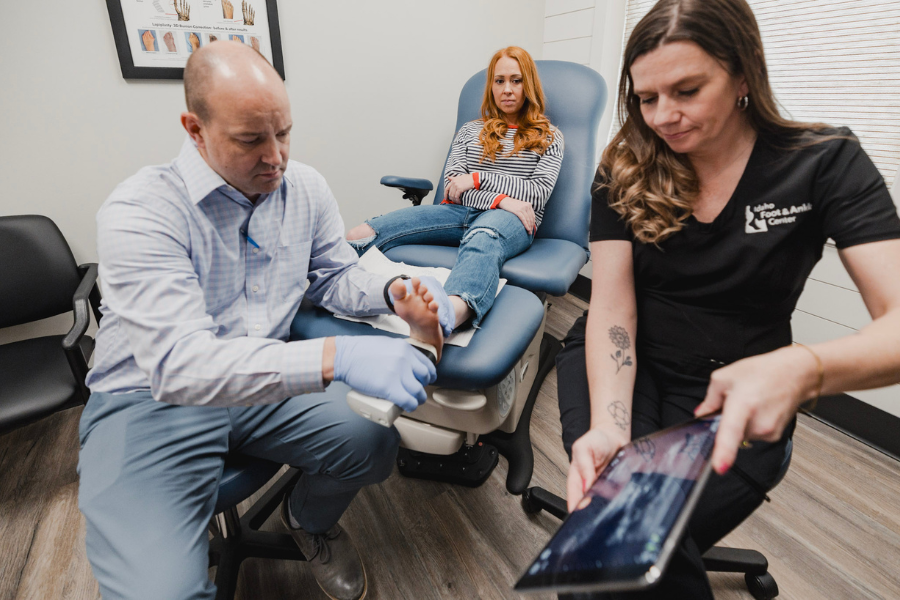
We assess not just the injury or symptom, but the full picture — how your foot functions during movement, where the load is being distributed, and what's contributing to the breakdown. From there, we can recommend targeted treatment, appropriate orthotics, and footwear guidance that actually accounts for your specific anatomy.
The trails of eastern Idaho are too good to miss. With the right footwear system and the right professional support behind you, there's no reason foot and ankle issues should keep you off them.
New patients are always welcome at Idaho Foot & Ankle Center. Whether you're prepping for your first serious hike or troubleshooting a recurring issue that's been holding you back, our team is ready to help you hit the trail with confidence.
Wear them on short, low-intensity outings first, gradually increasing duration. Quality wool or synthetic hiking socks reduce friction significantly during the break-in period. If blisters persist, a professional fit assessment may be needed.
Yes, especially on inclines or with unsupportive footwear. Proper boots, insoles, and a professional evaluation before hiking season can prevent flare-ups and allow you to stay active on the trail.
On well-maintained, moderate terrain with good footing, trail running shoes can work well. For technical, rocky, or steep trails, a more structured hiking boot with ankle support is the safer and more appropriate choice.
If you experience persistent foot or ankle pain during or after hikes, fatigue that's disproportionate to the effort, or a history of overuse injuries on trail, a podiatric evaluation can determine whether custom orthotics would benefit you.
.png)
September 4, 2026
Learn how hammertoes develop, which symptoms to watch for, and how professional treatment can reduce pain and improve alignment.
.png)
August 7, 2026
Learn how to recognize a foot corn, what causes it, and how professional podiatry treatment can relieve pain and prevent recurrence.
July 3, 2026
Understand when foot surgery may be needed, what happens before treatment, and how our Idaho Falls podiatrists guide recovery.
.png)
April 14, 2026
Get podiatrist-approved tips on choosing the best walking or running shoes for your foot type and activity level in Idaho Falls.