


Children are always moving, growing, and changing. Because of that, it can be surprisingly easy for foot and ankle issues to go unnoticed. A child may assume discomfort is normal, may not know how to describe pain, or may simply keep going until a small concern becomes a bigger one. At Idaho Foot & Ankle Center, we help families recognize early warning signs and provide professional care that protects healthy development.
When growing feet are supported properly, kids can stay active, confident, and comfortable. When problems are ignored, everyday movement, sports performance, balance, and posture can all be affected. That is why early evaluation matters. If something seems off, it is worth having it checked by experienced professionals.
If you are concerned about your child’s foot health, our team offers Idaho Foot & Ankle Center and personalized care designed for every stage of growth. We also make it easy for families to get started through new patients resources.
Children’s feet contain developing bones, muscles, tendons, and growth plates that respond differently than adult feet. What looks minor on the surface can sometimes point to an underlying structural issue, gait imbalance, overuse injury, or biomechanical concern. Catching those issues early often leads to simpler and more effective treatment.
Many parents wait until pain becomes severe before seeking help. In reality, recurring fatigue, unusual movement patterns, and activity avoidance can all be early clues. Our role is to identify the source of the problem and recommend the right next steps so your child can move comfortably again.
Families trust our foot & ankle services because we focus on accurate diagnosis, clear communication, and treatment plans built around real life.
Some children slow down during sports, recess, or family outings because their feet tire faster than expected. They may ask to be carried, stop often, or seem frustrated when others keep moving. This can sometimes be related to arch concerns, gait inefficiency, or poor foot mechanics.
One common issue is flexible flatfoot, where the arch does not support movement efficiently. That can increase strain through the feet and legs, especially during active play. If your child regularly falls behind physically, an evaluation can reveal whether structure or alignment is contributing.
We frequently assess concerns related to flatfoot and help families understand practical treatment options.
When a child suddenly loses interest in sports, dance, playground time, or neighborhood games, discomfort may be the hidden reason. Kids do not always say, “My heel hurts,” or “My ankle feels sore.” Instead, they may simply avoid the activity.
Heel pain is especially common during growth years, particularly in active children. Repetitive running and jumping can irritate sensitive growth areas and surrounding soft tissue. If your child used to love movement but now resists it, that change deserves attention.
Our team regularly helps children dealing with heel pain and activity-related discomfort return to the things they enjoy.
Sometimes children notice something unusual but feel embarrassed or nervous to mention it. They may avoid taking shoes off, hide their toes, or resist foot checks at home. That hesitation can be tied to nail pain, skin irritation, redness, or visible changes.
Parents should pay attention to swelling, thickened skin, persistent redness, unusual bumps, and toenail tenderness. These signs may indicate a condition that benefits from prompt treatment rather than watchful waiting.
We provide care for concerns such as ingrown toenails and warts in a calm, family-friendly setting.
Frequent stumbling is not always just clumsiness. Repeated tripping may be connected to balance deficits, toe positioning, weakness, tightness, or walking mechanics. Children often adapt without realizing anything is wrong, which is why patterns matter.
If teachers, coaches, or family members have all noticed repeated falls, it is smart to investigate. Better movement starts with understanding how the feet and ankles are functioning.
Our our podiatrists evaluate gait patterns and identify the root causes of instability whenever possible.
Pain should never be dismissed as a normal part of growing up. While children can have temporary soreness after activity, recurring pain, swelling, limping, or tenderness deserves professional attention. What appears minor may involve inflammation, stress injury, tendon irritation, or joint strain.
The good news is that early care often prevents longer recovery periods and future setbacks. If pain has lasted several days or keeps returning, scheduling an evaluation is the right move.
We diagnose and treat pediatric concerns ranging from sports injuries to overuse problems and structural conditions.
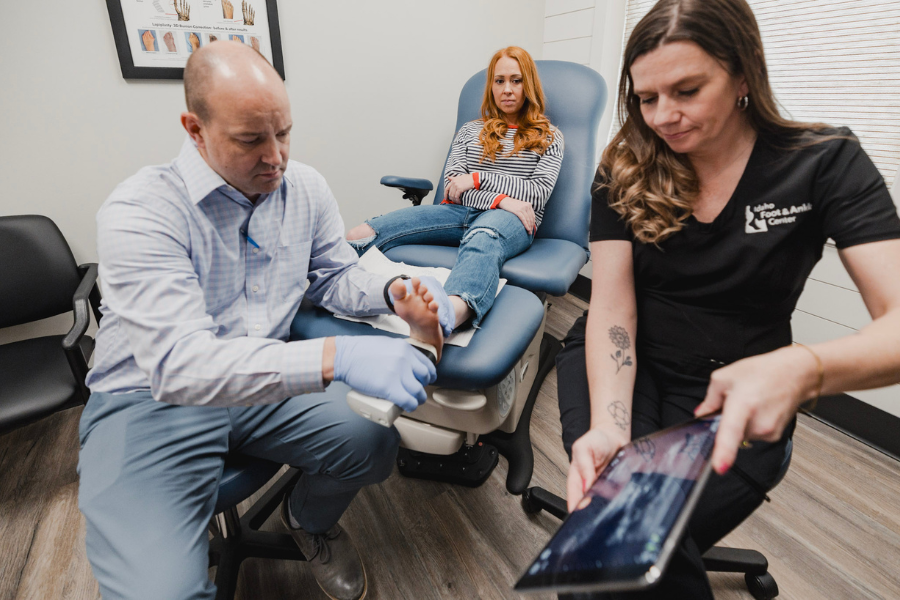
Parents often feel unsure about what happens during a pediatric foot appointment. We keep the process straightforward and supportive. We listen carefully, examine movement and structure, discuss symptoms, and explain findings in clear language.
Treatment may include activity guidance, footwear recommendations, custom support strategies, monitoring growth changes, or other appropriate solutions based on your child’s needs. Our goal is always to improve comfort, function, and confidence.
When families need answers, they can contact our support team to get more info and schedule care with confidence.
Children rely on their feet every single day for learning, play, sports, and growth. When warning signs appear, timely care can make a meaningful difference. If your child is slowing down, avoiding activities, tripping often, hiding their feet, or complaining of pain, do not assume they will simply outgrow it.
At Idaho Foot & Ankle Center, we are here to help families get clear answers and trusted treatment. Early evaluation today can support stronger, healthier steps tomorrow.
If pain is recurring, causes limping, includes swelling, or limits activity, it should be professionally evaluated.
Yes. Some cases are harmless, while others create fatigue or pain and benefit from expert care.
Activity can reveal hidden alignment or overuse issues that are less noticeable during rest.
Any ongoing pain, repeated tripping, visible changes, or sudden activity avoidance is a good reason to book an appointment.
.png)
September 4, 2026
Learn how hammertoes develop, which symptoms to watch for, and how professional treatment can reduce pain and improve alignment.
.png)
August 7, 2026
Learn how to recognize a foot corn, what causes it, and how professional podiatry treatment can relieve pain and prevent recurrence.
July 3, 2026
Understand when foot surgery may be needed, what happens before treatment, and how our Idaho Falls podiatrists guide recovery.
.png)
April 14, 2026
Get podiatrist-approved tips on choosing the best walking or running shoes for your foot type and activity level in Idaho Falls.